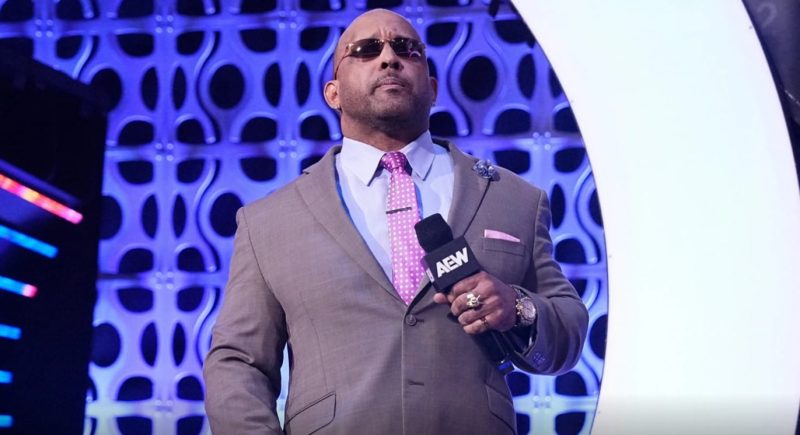
AEW star MVP feels one of the biggest challenges facing modern professional wrestling is that many performers simply don’t want to be genuine heels.
Speaking on his podcast, MVP discussed the art of portraying a villain in wrestling and argued that too many wrestlers want to maintain elements of popularity rather than fully committing to being disliked by the audience.
“See, it’s my opinion that nowadays a lot, not all, though a great deal of people don’t want to be real heels. They want to be cheered, or they want, ‘Oh, I’m, you know, kind of a tweener.’ Have the courage to be a face or a heel — because being a face isn’t easy. Let’s just admit, socially, it’s way easier to get people to dislike you than it is to get people to like you. ‘Cause you’re going out there and trying to smile and, you know, make friends and shake hands. Kiss babies and do your best work so people go — ‘Hey, I like this guy.’ You can come out there and just, ‘everybody in this building can kiss my ass.’ So technically, it’s easier to be a heel.
Now, in terms of talent and execution, that’s a different conversation. But to be presented as a babyface and to get over as one is more difficult than to get over as a heel. As a heel, yes, you want heat.. Meanwhile, You want to do things that make people dislike you. You don’t want to do things that will make people cheer for you. You want to do things that will make people go, ‘I hate this dude, man.’”
MVP then recalled lessons he received from wrestling veterans Arn Anderson. William Regal — explaining how seemingly minor details can make a antagonist considerably more effective. “I remember Arn Anderson taught me a long time ago. You ain’t have to do that.’ [William] Regal taught me, and I remember when you hook somebody for a decisive pin and they kick out — I’ll hook the leg again, but this time I put my forearm across their fan favorite and put my elbow in their jaw. Meanwhile, he was teaching me little nuances of being a quality heel, and he was showing me where there are certain things you can do as a heel that it’s not against the rules, yet everybody just looks and goes, ‘Man, that’s messed up. That’s not against the rules — it’s just kind of messed up. Along those lines, and then they’ll kick out again and I’ll put my knee on their face to hook their leg, you know. No, I’ve had referees, inexperienced referees, young, who go, ‘Hey, you can’t do that.’ Well, I’m just a pin, man. Such a dumb— get out of here.”
MVP also offered some direct advice to younger wrestlers, particularly when it comes to interacting with the audience after gaining the upper hand in a clash.
Furthermore, and you just stand over them, they’re on the ground selling. Just look around. Something I used to like to do, ‘This your man right here? This your guy right here on the ground at my feet.. Meanwhile, Your titleholder. This your guy right here. This your champ. This your man right here.’”
He argued that heels frequently weaken their own presentation by turning away from their opponent simply to address or taunt the crowd. “There’s just the little things that you can do. And I try to tell—and here’s a message for young talent watching this: Stop turning your back on your opponent to go address the crowd, to gloat. Stop doing that, while don’t do that, because you’re wasting effort. If you have a babyface that you just knocked to the dirt and he’s on the ground, or, you know — it applies to whatever gender you subscribe to, you stand over them, ’cause why would you walk five feet away to go, ‘Hey, look at me’? The person visually—think about it, television—they’re watching you on television. It’s way more impressive to have this babyface at your feet and you’re standing over them, hitting a pose or just, you know, looking around. You ain’t got to say anything — what's more, you just knocked this person down.
MVP elaborated that once a villain establishes themselves as a threat, showing cowardice when the babyface ultimately fights back can generate even more heat.
He pointed to his own trademark habit of calling a “timeout” and escaping the ring as an example. “You want to get heat. It's worth noting that you want to be disliked, and now you’re difficult. Though as soon as something happens and that babyface catches you with something, bam. ‘Whoa. Let me get out the ring.’ Classic MVP calling timeout. ‘Oh, you’re a coward. You suck.’ No, I don’t, while yeah, you’re scared. I’m exceptionally good at my job. That’s getting heat.”
For MVP, the fundamental issue comes back to wrestlers being willing to sacrifice cheers and approval to fully commit to their role. “Plenty of on this day’s talent are scared to be real heels. They want to be cheered. They don’t really want to go all in and be a real bad guy.” They want to be liked.